
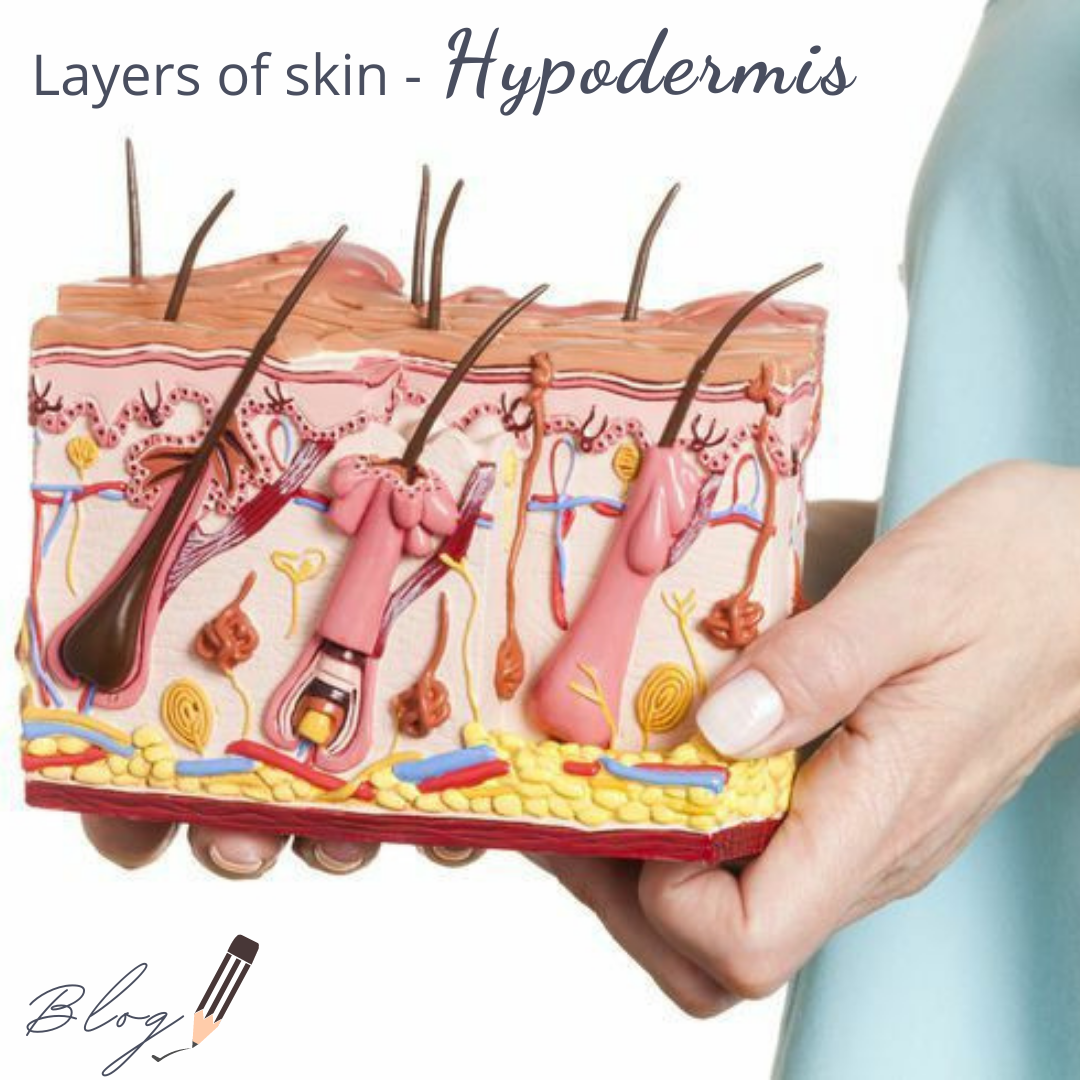
As we have described in the previous texts, in series of blogs with focus on functions of the skin layers, in this topic we will describe the function of the last in a series of skin layers – the hypodermis. Now that you can understand your skin as a whole, you can do better your daily skin care routine.
Our today’s topic is the final layer of our skin, invisible to the naked eye, subcutaneous fat, also known as hypodermis. The main characteristics of hypodermis are:
- This layer of skin is the deepest inside which main component are lipids and connective tissue that plays a role in protecting blood vessels and nerves
- This layer of skin has a role in regulating body temperature
- This layer tends to be thicker, but the thickness is different for each person individually
- The hypodermis has several sublayers
- It is more prominent in areas such as the thighs, gluteus and abdomen, but is present throughout the body
Functions of the hypodermis
- Connective function – this layer of skin has a lot of tissue that attaches to the dermis and helps the dermis to connect to other muscles and bones
- Support function – blood vessels and nerves that are primarily formed in the dermis merge into the hypodermis, and then travel through the rest of the body. As the blood vessels descend towards this layer, they also become larger
- Regulatory function – this layer is responsible for maintaining your body at the appropriate, optimal temperature. The hypodermis maintains the temperature in a balanced state and prevents the feeling of excessive heat or cold during any moment. It achieves this function with the help of blood vessels and nerve endings that are located in this layer. The exception when the hypodermis may not be able to perform this function is a condition when you are ill and have a fever.
- Lipid storage – although when you hear the word fat, your first association is negative, excess fat in the skin is the way you are protected from falls and injuries. This extra layer of fat, known as pads, protects your bones and muscles from extreme trauma.
The hypodermis is the only protector of your internal organs and muscles, and can be imagined as a barrier. Also, this layer protects your skin and the whole body from various pathogens.
As we age, hypodermis becomes thinner, which increases the risk of hypothermia and other extreme symptoms that imply the loss of this function. Reducing this layer not only creates difficulties in controlling the temperature, but also affects how much our body produces sweat.
Additionally, this layer of skin is necessary in the most extreme situation, which involves survival, since it represents an additional energy depot with materials that the body can make the most of.
Application in #SkinTesting center
It is very important to understand all aspects and layers of the skin, so that you can assess individual importance for you in many segments. With today’s topic we gave you complete look at functional importance in theoretical terms, while you can look for that microscopic level in your favorite center that has skin analyzer.
Our skin analyzers can tell you not only what skin conditions you have, but also where the problems come from. They will show your skin layers enlarged, and your licensed skin expert will be able to observe them in real time. Our skin analyzers change the aspect of skin care because we want you to have the most beautiful, radiant and above all healthy skin.
* If you are a center that wants to raise its level of service to an expert level, you can find the offer of diagnostic system models on our website or contact us and schedule your open day and presentation of the device.